How to Get Stains Out of a Mattress
A step-by-step guide to removing sweat, urine, and blood stains from a mattress without soaking it — plus how to deodorise it and how often it should be deep cleaned.
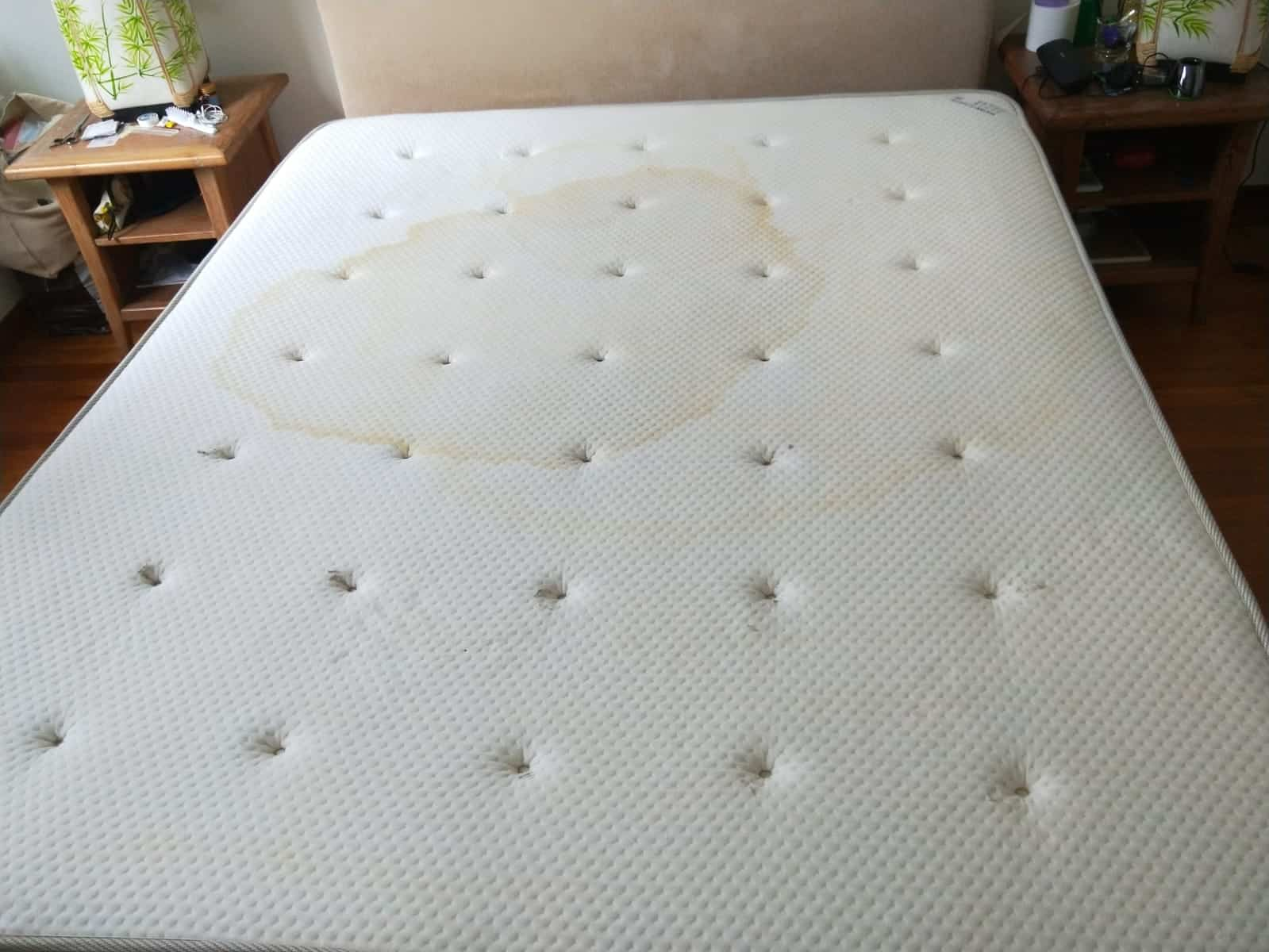
You strip the sheets to wash them, and there it is. A yellow shadow. A mystery spill. Something the dog left behind.
Because you can't throw a mattress in the wash, cleaning it requires a completely different approach to laundry. The rules change when the fabric is attached to ten inches of foam.
The One Thing You Can't Do to a Mattress
Never, ever soak it.
If you spill coffee on a shirt, you run it under the tap. If you do that to a mattress, the water bypasses the surface and runs straight into the padding.
Foam and padding hold water for days. A wet mattress in a dark room grows mould from the inside out. Every single method below is built around minimal moisture—you have to treat the surface without letting the liquid sink.
What's on your mattress?
Pick the stain — each one has its own rules.
Stain by Stain
Different stains need different chemistry. Here is how to handle the most common ones.
- Sweat and body oil yellowing: This is a slow stain, so it needs a slow fix. Mix baking soda with a tiny amount of 3% hydrogen peroxide to form a paste. Dab it on, let it dry completely, then vacuum it off.
- Urine — fresh: Blot hard with paper towels until nothing more lifts. Spray lightly with an enzyme cleaner (damp, not wet). Let it dwell, blot again, and dry fully.
- Urine — old: The ring stain is often permanent dye alteration, but the odour can be treated. Lightly mist with an enzyme cleaner, cover with a towel, and let the enzymes work.
- Blood: Cold water only. Heat cooks the protein into the fabric permanently. Make a paste of salt and cold water, apply it to the fresh stain, let it dry, and scrape it off.
- Drink spills: Act fast. Blot the liquid, then dab with a mixture of cold water and a single drop of dishwashing liquid. Blot again to lift the soap.
- The all-over refresh: Sift a generous layer of baking soda over the entire mattress like snow. Leave it for at least four hours (overnight is better), then vacuum it off slowly.
Drying It Properly — The Step Everyone Skips
Treating the stain is only half the job. Drying it is the other half.
You need airflow. If you can move the mattress into direct sunlight, do it—UV light is a natural disinfectant and bleaches stains. If you can't, set up a fan pointing directly at the wet patch.
Apply the 24-hour rule: do not remake the bed for a full day if you've used liquid. And let's be honest about Auckland winters—a mattress left to dry in a closed, damp room hasn't dried at all. Open the window or run a dehumidifier.
When to Clean It Professionally — And When to Let It Go
Professional hot water extraction cleans the top layer of the mattress, pulling out years of dead skin, dust mites, and sweat. It's usually a flat rate for any size, and it leaves the bed genuinely fresh.
But here is the honest line: a mattress past a certain saturation history is a replacement, not a cleaning job. If it has sustained years of heavy, untreated urine saturation, the foam inside is ruined. Anyone who says they can clean that out completely just wants your money.
Mattress Cleaning Questions, Answered
How often should a mattress be cleaned?
+
Can professional cleaning remove old yellow stains?
+
Is it safe to sleep on it the same night?
+
Do mattress protectors actually work?
+
What kills dust mites in a mattress?
+
Eight hours a night deserves a clean place to land.
Need a hand with this?
Bali Fresh Cleaning provides professional cleaning across Auckland. Tell us about your space and we'll put together a quote.
Request a quote